Introduction
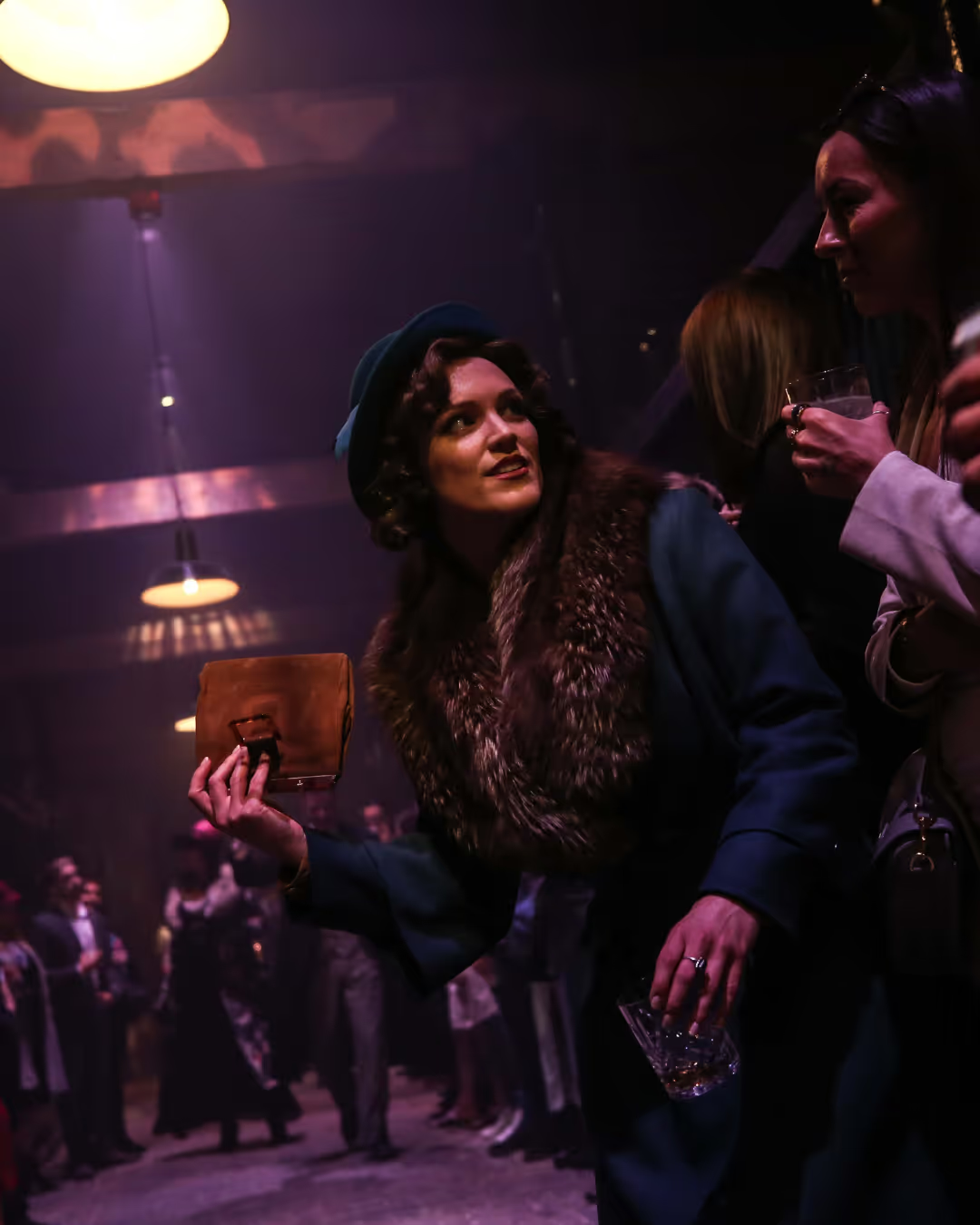
An immersive event experience is more than a party, performance, or themed night. It is a fully designed world where guests don’t just watch what is happening, they become part of it.
From luxury private parties to large-scale brand activations, immersive events are changing how people experience entertainment, connection, and storytelling.
But what does “immersive” actually mean in this context, and why is it becoming one of the most sought-after forms of modern event design?
This guide breaks it down clearly.
What is an immersive event experience?
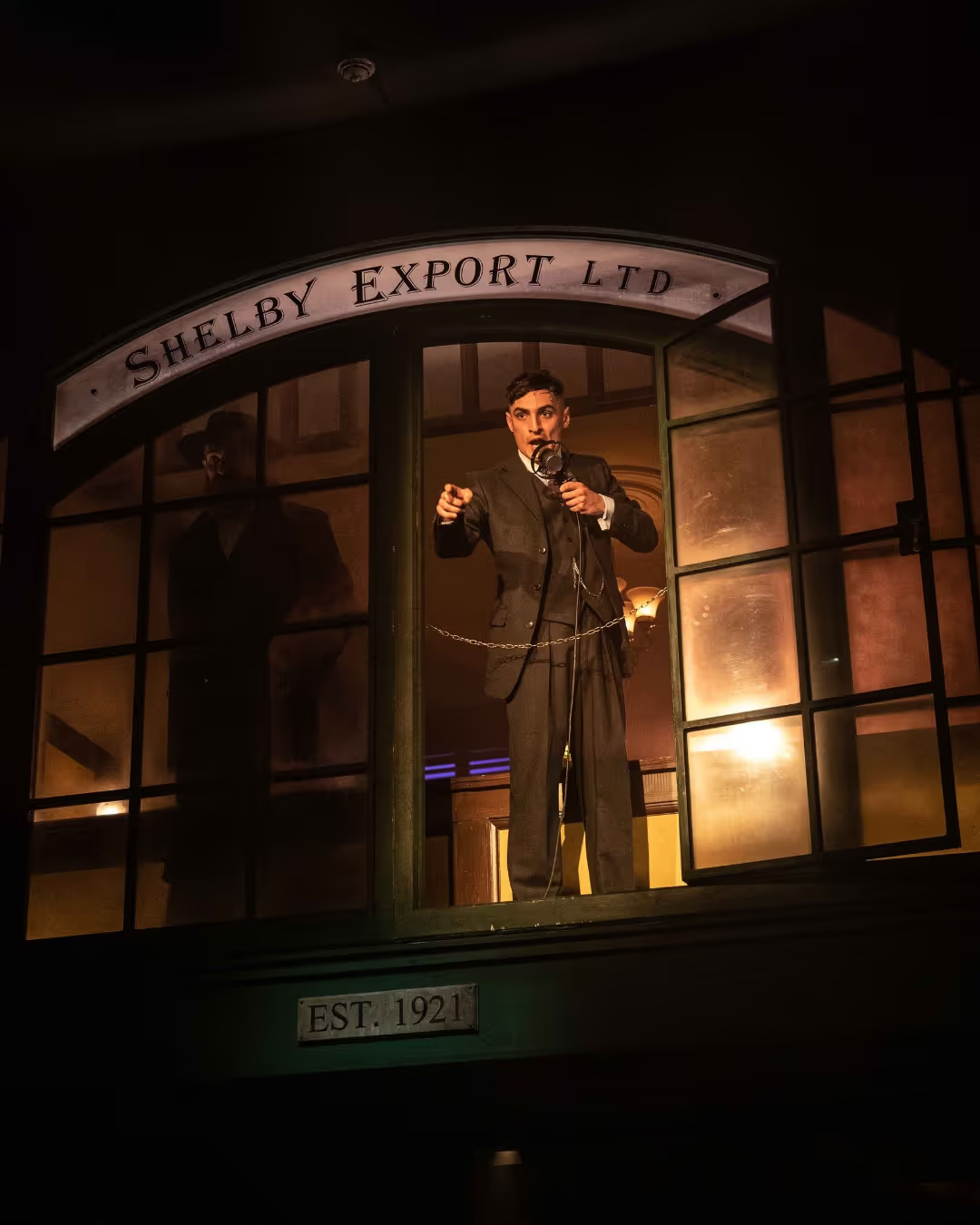
An immersive event experience is a form of event design where every element, including environment, storytelling, sound, interaction, and performance, is intentionally created to place guests inside a living narrative.
Instead of being passive observers, guests become active participants.
This can include:
- Interactive storytelling
- Themed environments or worlds
- Live performers who respond to guests
- Multi-sensory design (sound, scent, lighting, texture)
- Guest-led exploration or decision making
The goal is simple: to make people feel like they have stepped into another reality.
How immersive events are different from traditional events
Traditional events usually follow a linear format:
- Guests arrive
- They sit or stand
- They watch entertainment
- They leave
Immersive events remove that separation.
Instead, they are:
- Fluid rather than fixed
- Interactive rather than passive
- Story-driven rather than schedule-driven
- Designed around experience, not format
At an immersive event, there is no single “stage” moment. The entire space is the stage.
What happens inside an immersive event?
No two immersive events are the same, but most include a combination of:
1. A narrative or concept
Every immersive experience starts with a world or idea. This could be abstract, theatrical, futuristic, or rooted in a specific theme.
2. Designed environments
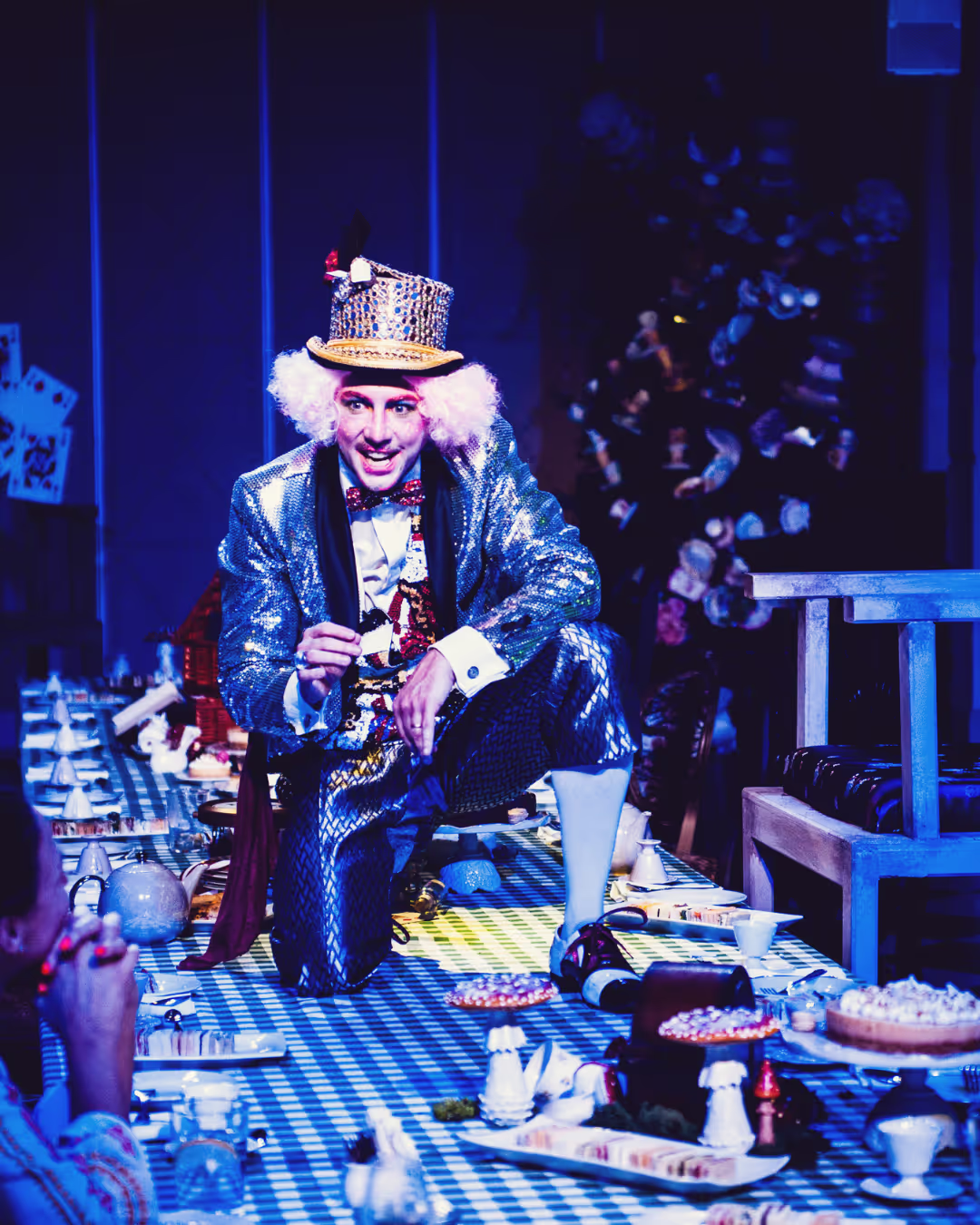
Spaces are transformed through set design, lighting, soundscapes, and physical installations to make guests feel fully inside the concept.
3. Performance and interaction
Actors or hosts may guide the experience, but often in subtle, responsive ways rather than traditional performance structures.
4. Guest participation
Guests are often encouraged to explore, make choices, or engage directly with the environment and performers.
5. Sensory detail
Sound, lighting, texture, and sometimes scent are used to heighten emotional engagement and realism.

Why immersive event experiences are growing in popularity
Immersive events are becoming more popular because audiences are looking for more meaningful and memorable experiences.
Instead of attending something they simply watch, people want to:
- Feel part of the story
- Share unique, highly visual moments
- Experience something they cannot replicate elsewhere
- Connect socially in a more engaging way
For luxury private events and corporate experiences, this format also creates stronger emotional impact and long-lasting memory.
Types of immersive events
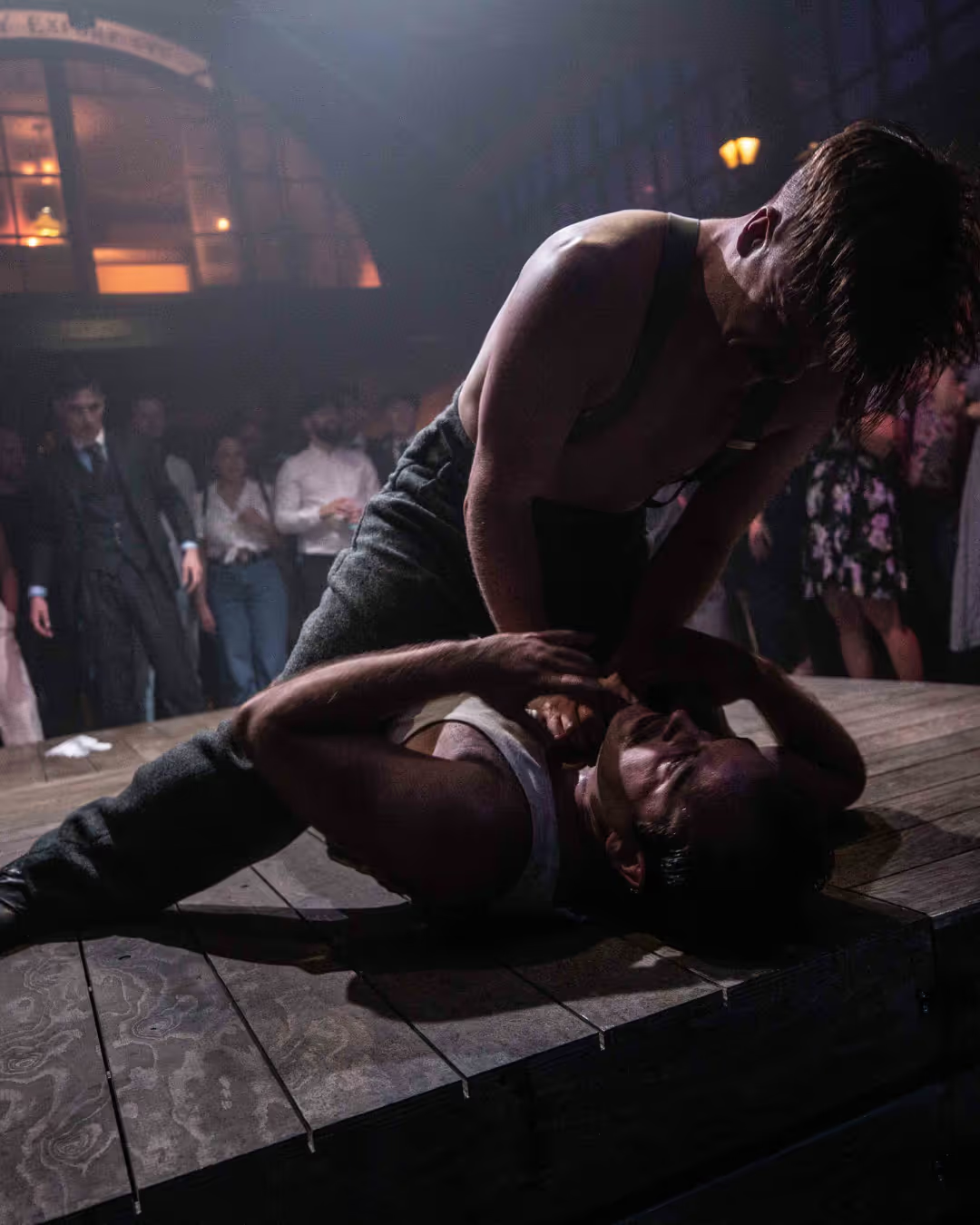
Immersive experiences can be designed for many different contexts, including:
Private celebrations
Luxury birthdays, anniversaries, and bespoke parties designed around a personalised narrative.
Corporate events
Brand activations, product launches, and team experiences designed to engage audiences emotionally rather than passively.
Experiential entertainment
Ticketed or invitation-only events where guests enter a fully realised world for entertainment purposes.
What makes a luxury immersive event different?
Not all immersive events are the same. Luxury immersive experiences focus on:
- Highly detailed storytelling
- Bespoke, not templated design
- Premium production quality
- Seamless guest flow
- Emotional and sensory depth
- Exclusivity and personalisation
The aim is not just to entertain, but to create something unforgettable and tailored.
Why immersive events matter
In a world where most experiences are digital, immersive events offer something increasingly rare: real, shared, physical experiences that feel meaningful.
They bring together storytelling, design, and human interaction in a way that traditional events often cannot.
An immersive event experience is not defined by a format or theme. It is defined by how completely a guest is pulled into a world that has been carefully designed for them.
As the demand for more meaningful, memorable, and shareable experiences grows, immersive events are becoming one of the most powerful ways to bring people together.
.avif)

.jpg)